
Why Soil Classification Matters for Underground Infrastructure
When installing underground tanks, pipelines or structures, the type of soil surrounding the installation plays a critical role in long-term performance. One of the key factors engineers assess is soil expansivity — the tendency of soil to shrink when dry and swell when wet.
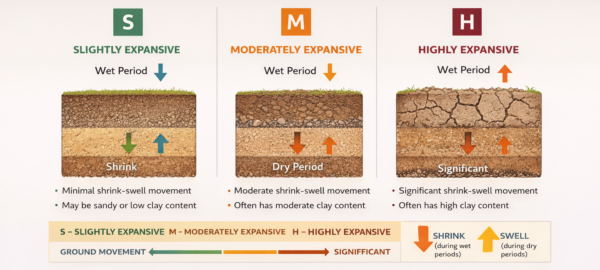
In New Zealand, soils are commonly classified into expansivity classes S, M and H, which indicate how much ground movement can be expected due to moisture changes.
Understanding these classes is essential when designing stormwater systems, detention tanks, and other buried infrastructure.
What Is Soil Expansivity?
Expansive soils contain clay minerals that absorb water and expand, then shrink as they dry. This continuous movement can place stress on buried structures, foundations and pavements.
Ground movement caused by expansive soils can lead to:
For underground tanks, this movement can affect both structural integrity and hydraulic performance.
Soil Expansivity Classes Explained
Class S — Slightly Expansive
Class S soils experience minimal shrink–swell movement and are generally considered low risk for ground movement.
Characteristics:
Implications for construction:
Class S soils are generally the easiest conditions for underground installations.
Class M — Moderately Expansive
Class M soils exhibit moderate shrink–swell behaviour and require careful consideration during design and installation.
Characteristics:
Implications for construction:
Many residential development sites fall into this category.
Class H — Highly Expansive
Class H soils undergo significant shrink–swell movement and pose the greatest risk to underground structures.
Characteristics:
Implications for construction:
In Class H soils, inappropriate installation can lead to long-term performance issues.
Why Expansivity Matters for Stormwater Tanks
Underground stormwater systems must remain structurally stable and hydraulically functional for decades. Expansive soils can impose external forces on tanks that were not present at installation.
Key risks include:
Designing for soil conditions from the outset helps prevent costly remediation later.
Design Considerations for Expansive Soils
When installing tanks in M or H class soils, engineers typically consider:
The goal is to minimise soil movement effects on the buried structure.
The Role of Geotechnical Assessment
A site-specific geotechnical investigation provides the most accurate understanding of soil behaviour. This information allows designers to select appropriate installation methods and infrastructure solutions tailored to local conditions.
Ignoring soil expansivity can lead to performance issues even if all other design aspects are correct.
Building for Long-Term Performance
Soil conditions do not change after construction — but their effects accumulate over time. Infrastructure installed in expansive soils must be designed to withstand decades of seasonal movement.
Well-engineered systems account for these forces from day one, ensuring reliability, compliance and reduced maintenance throughout the asset’s life.
In Summary
Soil expansivity classes S, M and H describe the degree of ground movement expected due to moisture changes.
Understanding these classifications is essential for safe, durable underground installations — particularly for stormwater tanks and other buried infrastructure.
By matching design and installation methods to soil conditions, projects can achieve long-term performance and avoid costly failures below ground.
Subscribe for regular updates, your email address is required for subscription.