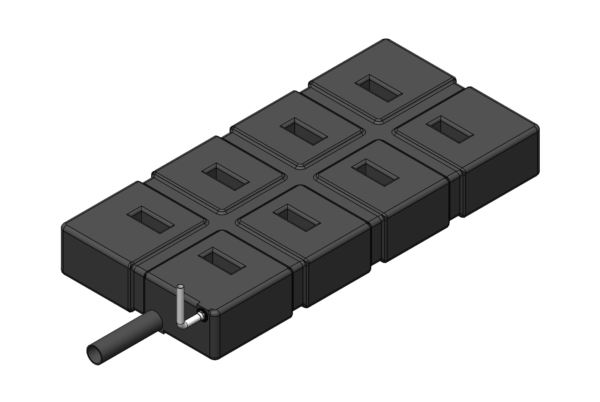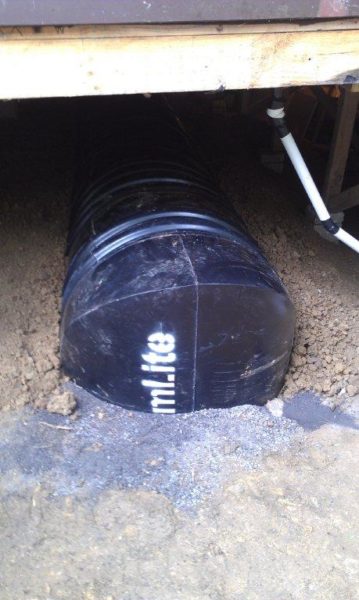
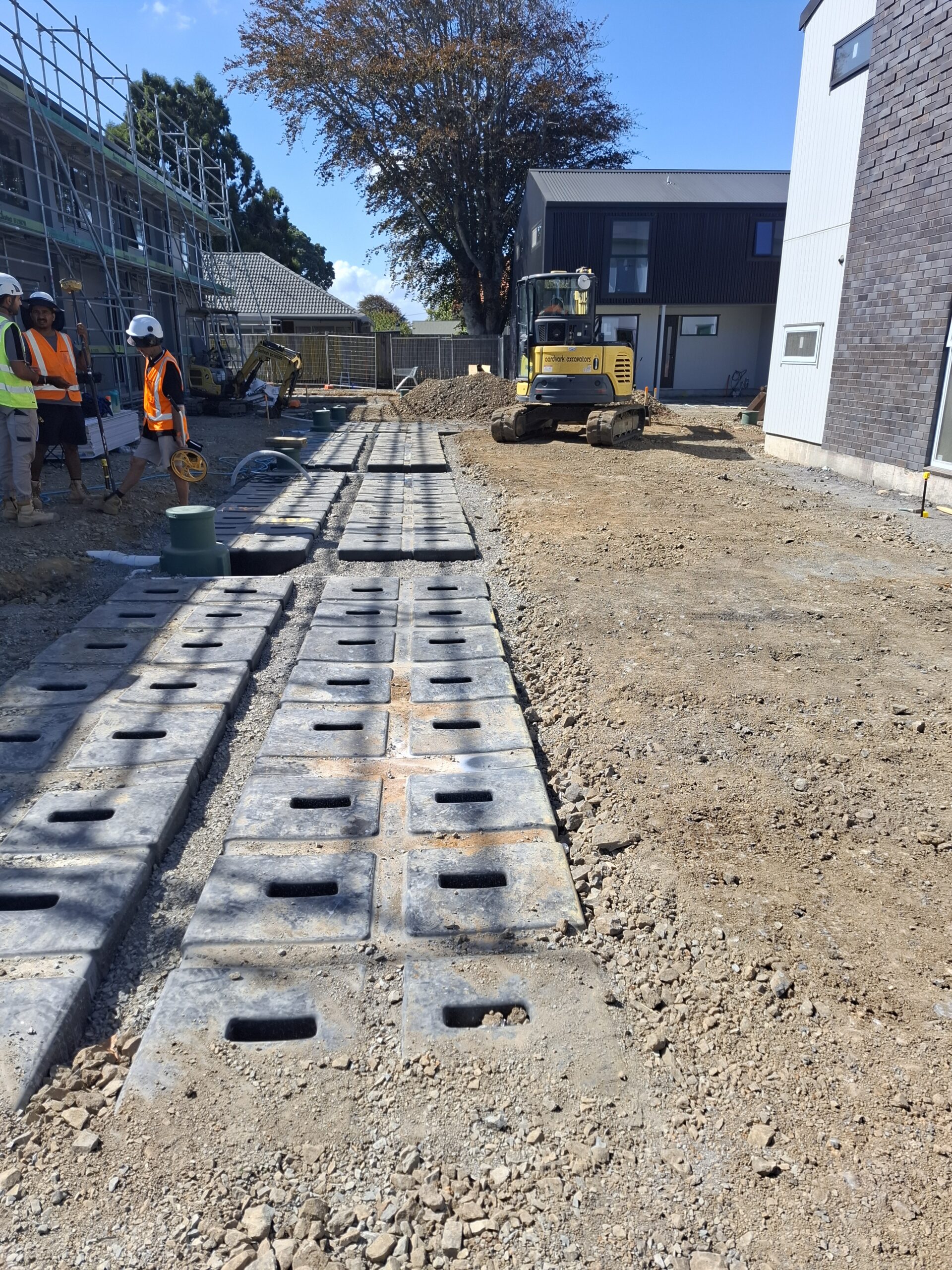

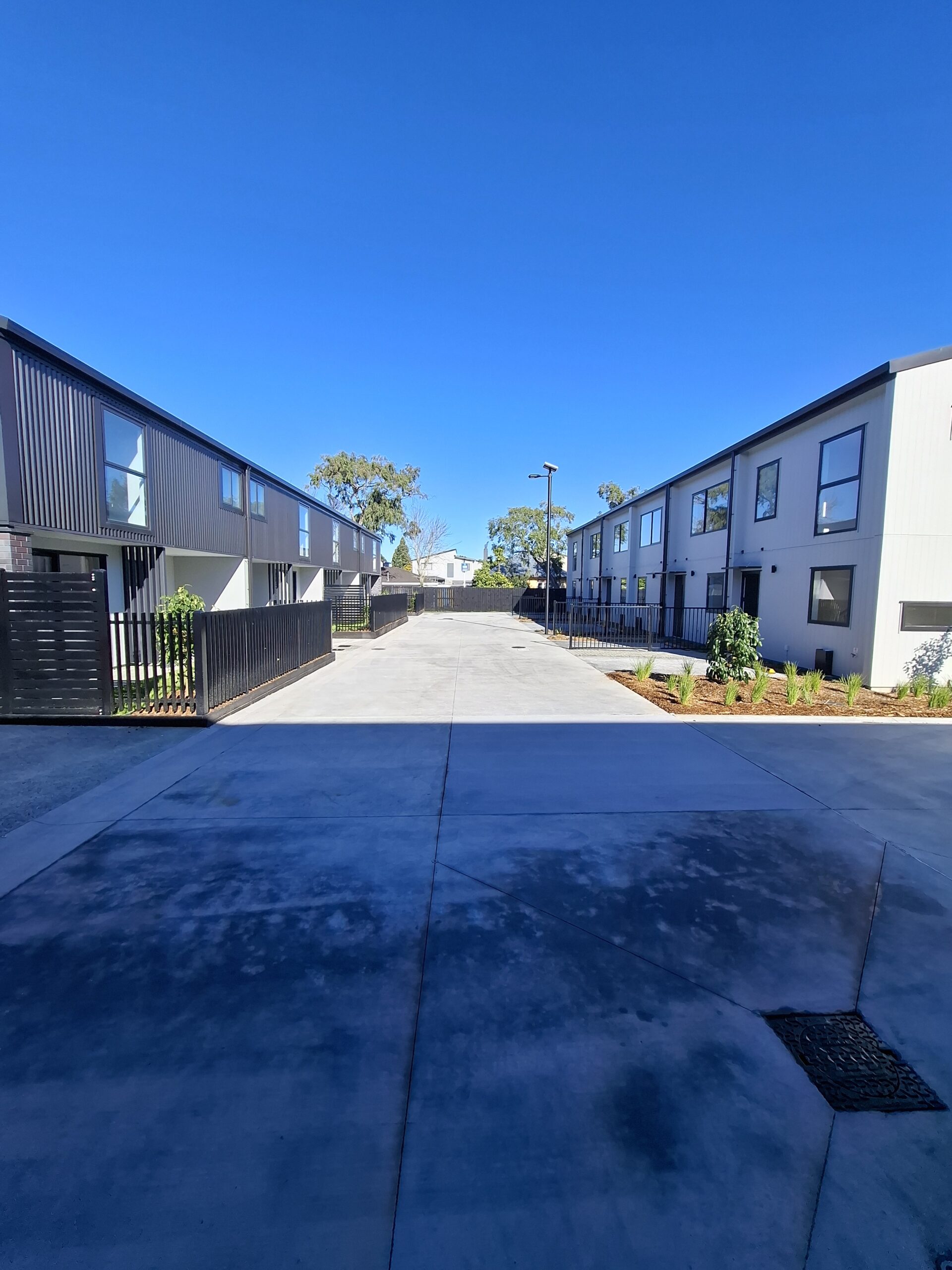
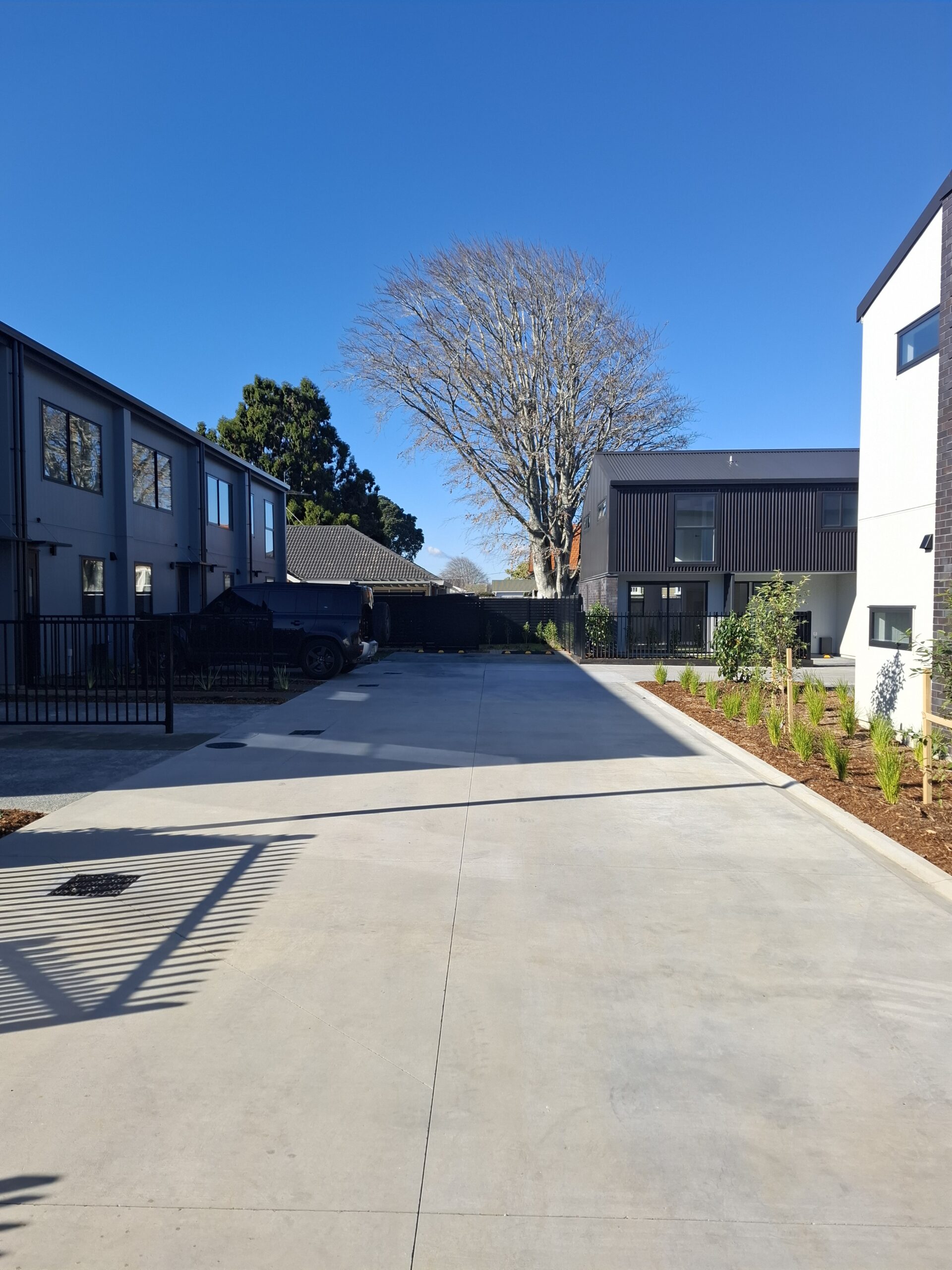
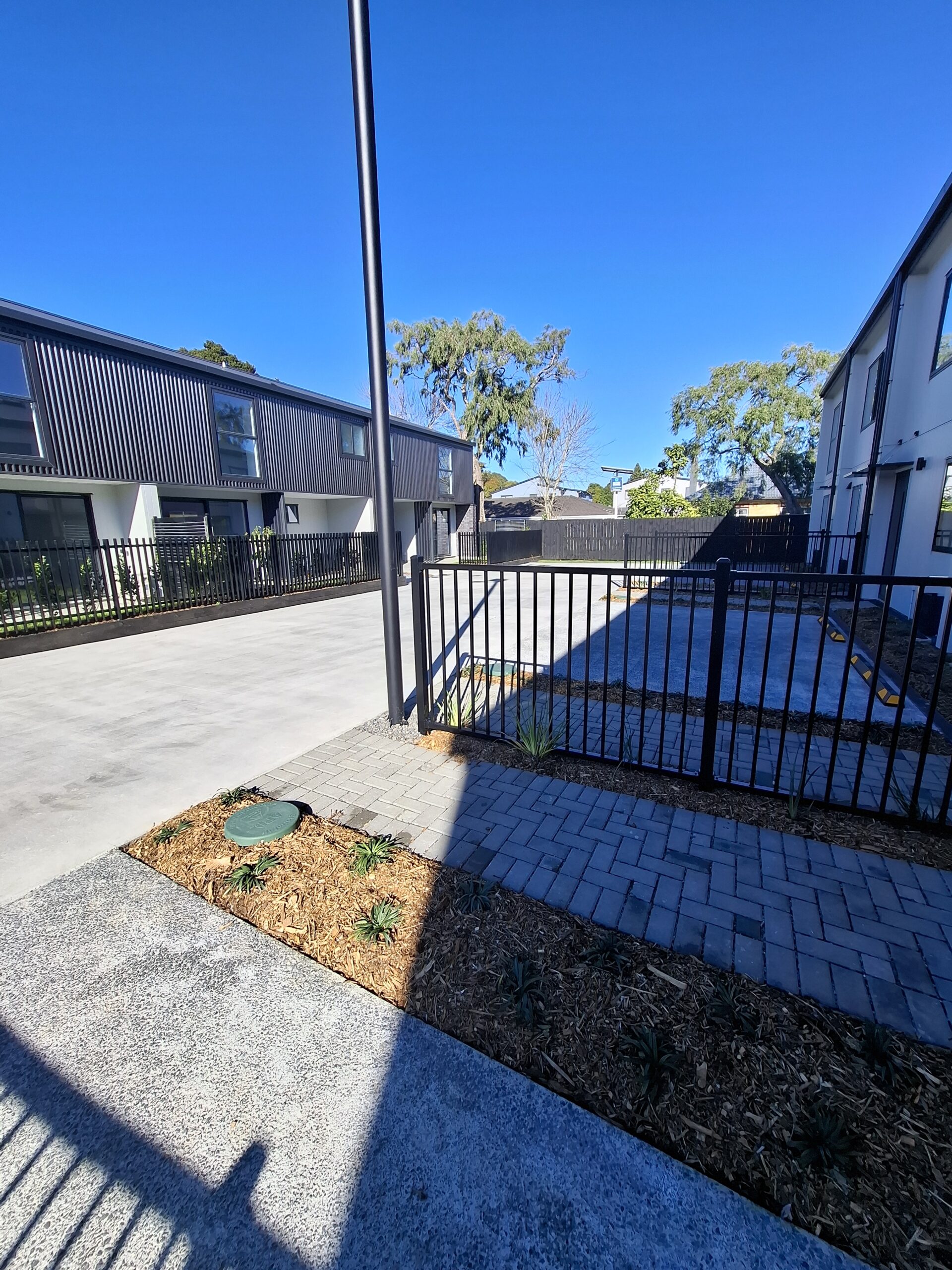
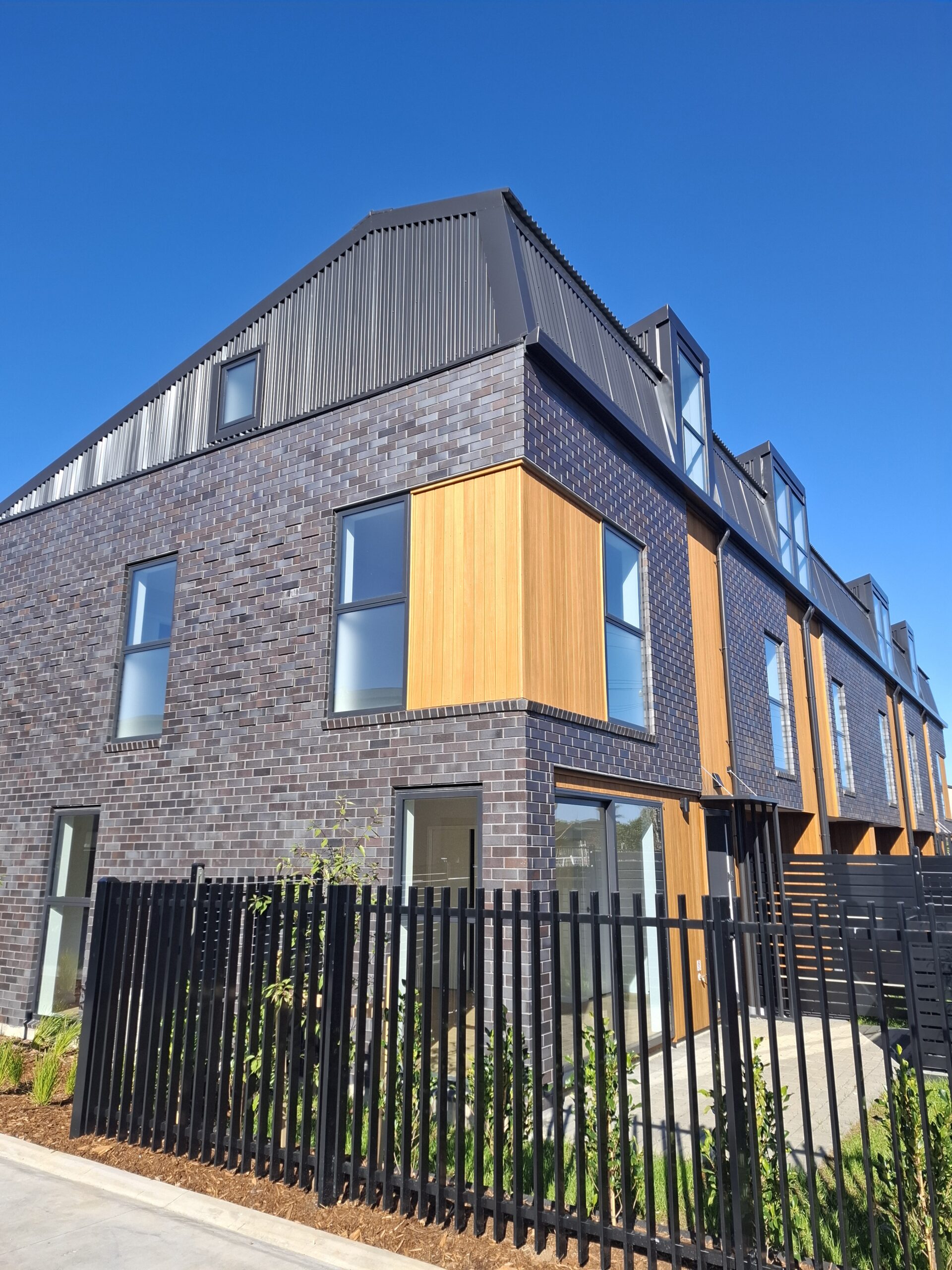
On a Manukau multi-unit site where shallow drainage invert levels ruled out deep tanks, APD StormSlab® delivered 46m³ of detention using two 300mm deep tanks per lot, certified as standard for 10-tonne driveway loading.
GJ Gardner Manukau required a 46m³ stormwater detention and retention system for a multi-unit residential development. On-site testing revealed extremely shallow drainage invert levels, ruling out traditional deep underground tanks because there was no gravity fall to work with. Spatial constraints also ruled out an above-ground alternative.
The shared access way layout added a second requirement: a subsurface system that could carry medium vehicle traffic across the driveway zones. The development needed underground pumps as well, to keep operational noise away from neighbouring properties, ideally without the footprint of dual distribution chambers.
Alternative tank systems were considered for the project. One could not work with the shallow connection levels on site. Another could not certify the 10-tonne load the shared access way required without moving to a custom solution. StormSlab® could meet both the shallow profile and the loading, which is why it was selected.
The deciding factor was the access way loading. APD’s PS1 covered the 10-tonne load the shared access way required, so the trafficable zones were certified without any custom engineering. That, paired with the shallow tank profile, let one system run across the whole site.
| Attribute | Specification |
|---|---|
| System type | StormSlab® Tank System |
| Application | Stormwater detention and retention |
| Total capacity | 46m³ across the development |
| Tank dimensions | 300mm H x 4,700mm L |
| Capacity per tank | 1,435 litres |
| Tanks per house lot | Two |
| Load rating | 10-tonne traffic load (covered by project PS1) |
| Pump configuration | Single-chamber integrated submersible pump |
| Bowers & Son | Concrete |
Specifying two 300mm deep StormSlab® tanks per house lot kept the excavation shallow and the volume covered. Each lot was excavated, installed and backfilled within an hour and a half, managed by the project manager on site to fit a tight construction timetable.
The same system worked across the access way, driveway and garden zones on the one site. The PS1 covering the 10-tonne loading gave the development the capacity it needed where it mattered, and the single-chamber pump kept operational noise away from neighbouring units. GJ Gardner reported a great result that met all the client’s requirements.
A high council connection point and a trafficable access way are the kind of constraints that force a redesign or rule out density. Here they did not. The site was built as planned.
APD used shallow StormSlab® tanks measuring 300mm deep by 4,700mm long, which integrate with low connection heights where deep tanks cannot. Two tanks per house lot, at 1,435 litres each, delivered 46m³ of detention across the development without the gravity fall a traditional deep tank requires.
Yes. On this project a standard PS1 covered the 10-tonne load the residential access way required, so the tanks ran under the driveway and access way without a custom design. Heavier commercial or industrial loads are fine too, they just need a site-specific PS1 for the higher loading.
The site combined two constraints that narrowed the options: very shallow connection levels and a trafficable access way. Alternative systems considered could meet one constraint but not both, with the 10-tonne access way load being the sticking point. StormSlab® suited the shallow profile, and APD’s PS1 covered the access way loading, so it covered both.
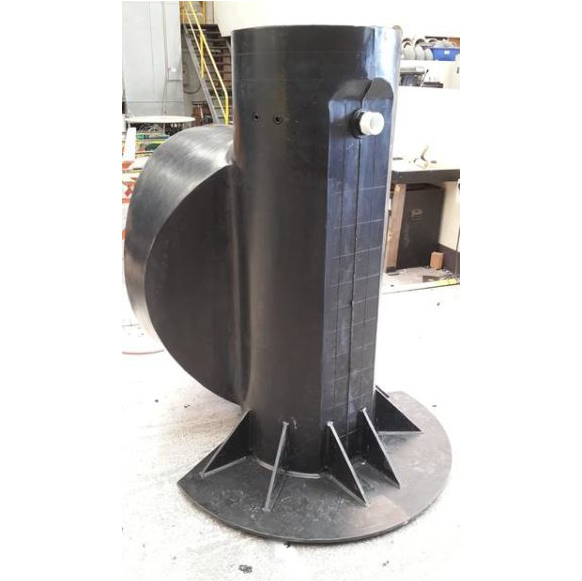
APD worked alongside Whites International to integrate a submersible pump into a single chamber. This kept operational noise away from neighbouring units and removed the need for a second distribution chamber, saving space on a constrained site.
Subscribe for regular updates, your email address is required for subscription.